
In the modern political arena, questioning the mechanics of a past election is often treated as a societal taboo. In Washington, members of both major parties hold their breath, hoping to avoid any discussion of the 2020 presidential race, knowing that the media is always waiting to unleash the label of “election denier.” But a functioning republic cannot operate on enforced silence. To ensure the integrity of our future elections, we must have the courage to apply basic mathematical scrutiny to our past ones.
When you strip away the partisan vitriol and look strictly at the data, the 2020 election presents statistical anomalies that warrant rigorous, objective investigation.
To understand the scale of these anomalies, we have to look at the historical baseline. In 2012, President Barack Obama secured his reelection with 66 million votes out of a total 127 million cast nationwide. Four years later, Donald Trump won the presidency with 63 million votes amid a total turnout of 129 million. Throughout the period from 2000 to 2016, the average national voter turnout hovered steadily around 60 percent.
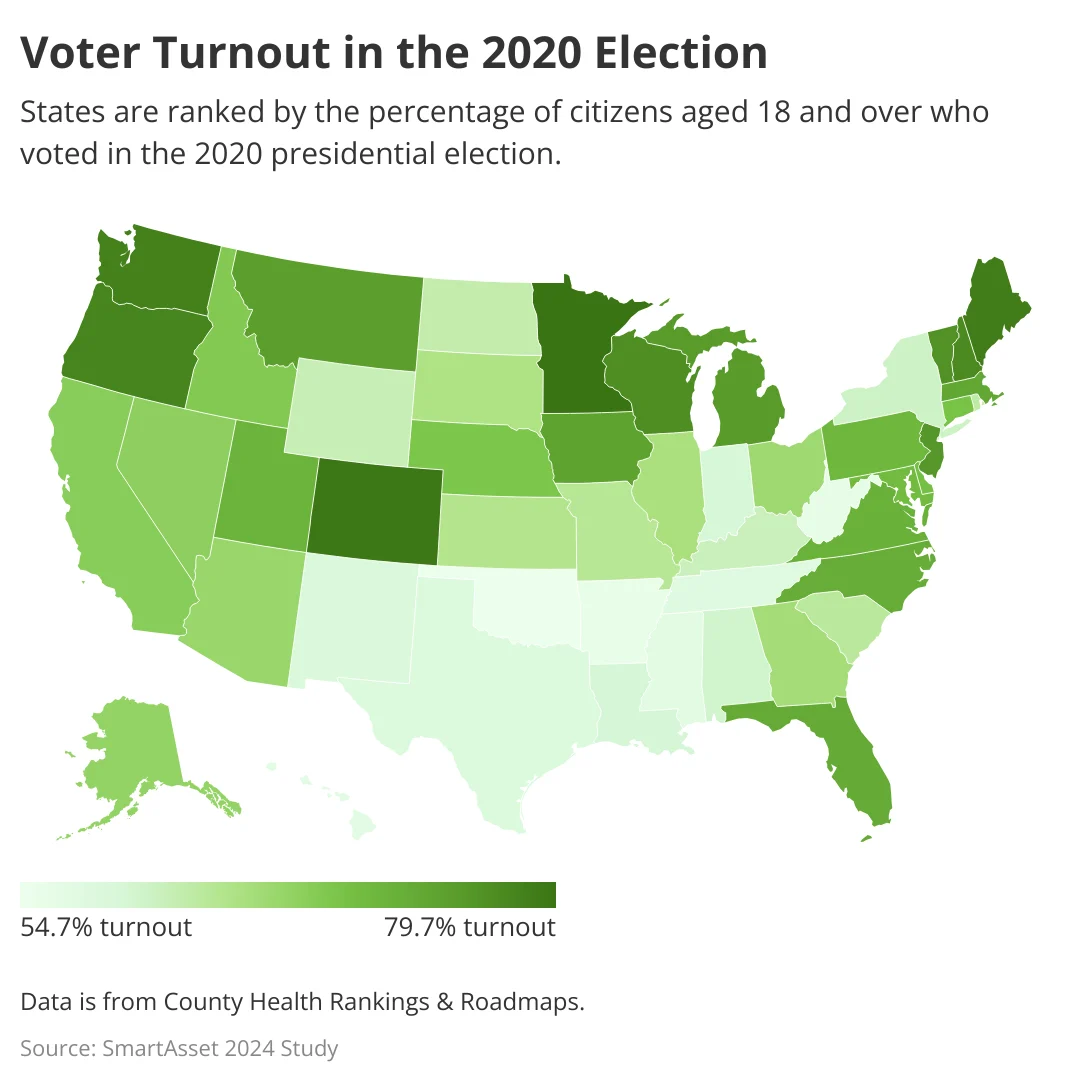
Then came 2020. During a global pandemic—a period defined by lockdowns, social distancing, and systemic disruption that one might logically expect to depress civic participation—voter turnout skyrocketed to 67 percent. This was the highest turnout in recent American history, sitting a full 10 percent above the historical average. The sheer volume of participation resulted in a staggering 156 million total votes cast. That 10 percent bump over the historical average equates to an additional 15.6 million votes injected into the system. Joe Biden won the election with 81 million votes, securing roughly 15 million more votes than Barack Obama did at the absolute height of his political popularity eight years prior.
Are these numbers impossible? No. But in the world of data auditing, massive deviations from historical baselines are red flags that require detailed reconciliation.
To conduct this reconciliation, citizen auditors must turn to the data provided by the Election Assistance Commission (EAC). Established by the Help America Vote Act of 2002, the EAC provides federal funding to states to upgrade their voting technology. In exchange for these federal dollars, states are required to report critical election data back to the EAC, including the total number of voter registrations, the methods by which people voted (early, election day, or by mail), and the total votes cast.
When independent researchers began cross-referencing this EAC data with state-level demographic changes, a deeply confusing picture emerged. The most glaring example is the state of Michigan.
Between the 2018 midterms and the 2020 general election, Michigan reported a massive increase of 600,000 new voter registrations. On its face, a surge in registration might indicate a highly motivated electorate. However, the 2020 federal census revealed that Michigan’s total population had only grown by 200,000 people over the entire previous decade. The math simply does not align.
The mystery deepens when looking at the subsequent election cycle. When comparing Michigan’s 2020 registration numbers to its 2022 numbers, the state inexplicably lost 800,000 registered voters. This pattern of massive, rapid inflation followed by an equally massive, silent deflation was not isolated to the Rust Belt. In Florida—a state undergoing massive population growth—election officials reported a gain of 1,000,000 voter registrations between 2018 and 2020. Yet, by 2022, Florida’s rolls had somehow shed 750,000 registrations.
When citizens approach their local election officials to ask for an explanation regarding these violent fluctuations on the voter rolls, the response is almost universally uniform: they have no information on the event.
This lack of administrative curiosity is precisely why citizen oversight is mandatory. If a private corporation saw its customer database artificially inflate by hundreds of thousands of users only to shed them two years later, internal auditors would immediately suspect fraud, system errors, or gross mismanagement. We should demand no less from the custodians of our republic.
The unprecedented turnout of 2020, paired with the chaotic addition and subtraction of millions of voter registrations, highlights a critical vulnerability in how we administer democracy. We cannot simply accept the final tally provided by election officials as infallible truth. By analyzing the EAC data, comparing it against census records, and tracking the life cycle of voter registrations within our own states, citizens can force the mathematical accountability that our bureaucratic systems refuse to provide on their own.