
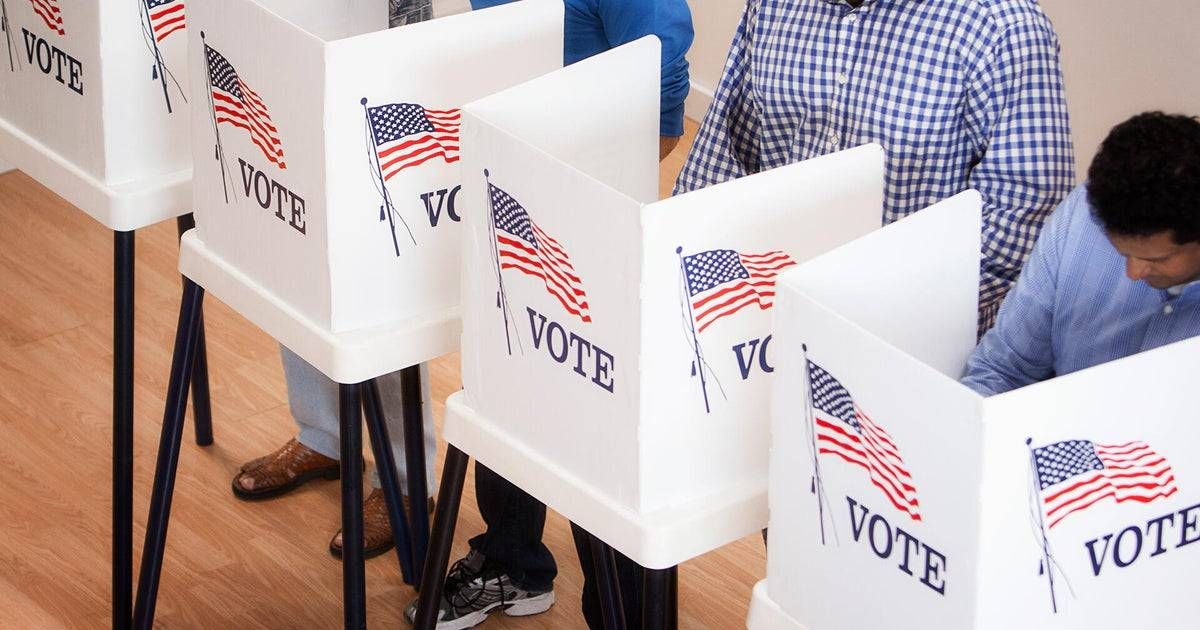
There was a time in American history when civic participation was neatly confined to the first Tuesday after the first Monday in November. Election Day was a singular, shared national event. Communities gathered at local precincts, volunteers checked names against physical ledgers, and by midnight, the results were largely settled. That era is over. With the widespread adoption of early voting and the explosion of mail-in ballots, our elections have morphed into a sprawling, decentralized monthly operation. We no longer have an Election Day; we have an Election Month.
While this prolonged voting period is often championed under the banner of convenience, it inherently complicates the security and transparency of the process. A single day of voting is relatively easy to monitor. A thirty-day rolling window, spread across multiple early-voting locations, drop boxes, and postal facilities, presents a logistical nightmare for anyone trying to guarantee chain of custody. But this is exactly why citizens must adapt their oversight strategies. If the process has expanded, the public’s vigilance must expand with it.
The foundational principle of auditing an election month is not about determining who won. It is strictly an exercise in accounting. The goal is to establish an independent, citizen-verified count of how many votes were cast. When citizens know the true volume of participation, they possess a mathematical baseline. If the official tally reported by government bureaucrats inexplicably exceeds the physical reality observed by the public, citizens have the hard data necessary to contest the election.
This auditing process begins with the physical polling locations, which generally account for roughly two-thirds of the total vote. Early voting is the first phase. In most jurisdictions, early voting spans approximately ten days and is consolidated into a handful of centralized locations. This makes it highly accessible for grassroots volunteer groups to monitor.
The strategy is straightforward: post volunteers outside these locations to count every individual who walks in to cast a ballot and every individual who walks out. If access inside the precinct is permitted, citizens should observe the physical ballot counter on the scanning machines. By logging the machine’s count at the opening and closing of the polls each day, volunteers can build a precise, irrefutable daily tally of early voters.
When Election Day finally arrives, the logistical burden increases significantly. A typical county might have upwards of 65 separate precincts operating simultaneously. Covering every single location from dawn until dusk is a massive undertaking, but a complete blanket presence is not strictly necessary to establish a reliable baseline. Citizen groups should deploy their volunteers strategically, targeting the largest, most densely populated precincts.
For the smaller precincts that cannot be physically monitored, citizens can use historical data and demographic averages to build a highly accurate estimate. In federal elections, average voter turnout generally hovers around 60 percent. By taking the total number of registered voters in an unmonitored precinct and multiplying it by that historical average, auditors can project the total expected vote. From there, subtract the percentage of votes already cast early or by mail. What remains is a narrow, predictable window of how many votes should logically appear on Election Day—typically 30 to 40 percent of the total turnout.
When you secure the numbers for early voting and Election Day, you effectively lock down the physical, in-person election. It is incredibly difficult for bad actors to systematically game the in-person vote. Smuggling thousands of individuals into physical precincts with fake IDs to cast fraudulent ballots is a high-risk, low-reward endeavor that is almost impossible to conceal.
Therefore, if an election is going to be inflated with illegitimate ballots, the injection will rarely happen at the physical polling place. The discrepancy will appear in the margins, specifically in the final tally provided by officials. By meticulously counting the people who actually showed up, citizen auditors create a mathematical perimeter.
Once your citizen group has its independent count, you wait for the election officials to release their numbers. If the government’s tally diverges from your observed count by 2 percent, it is a warning sign that warrants an immediate inquiry. If the difference is 10 percent or more, you are no longer looking at an administrative error—you are looking at a critical system failure. You have identified a problem, and you have the data necessary to take action.